Ötztal: Glacier Lodges and the Ten-Month Season
Sölden, Obergurgl, and the case for buying altitude.
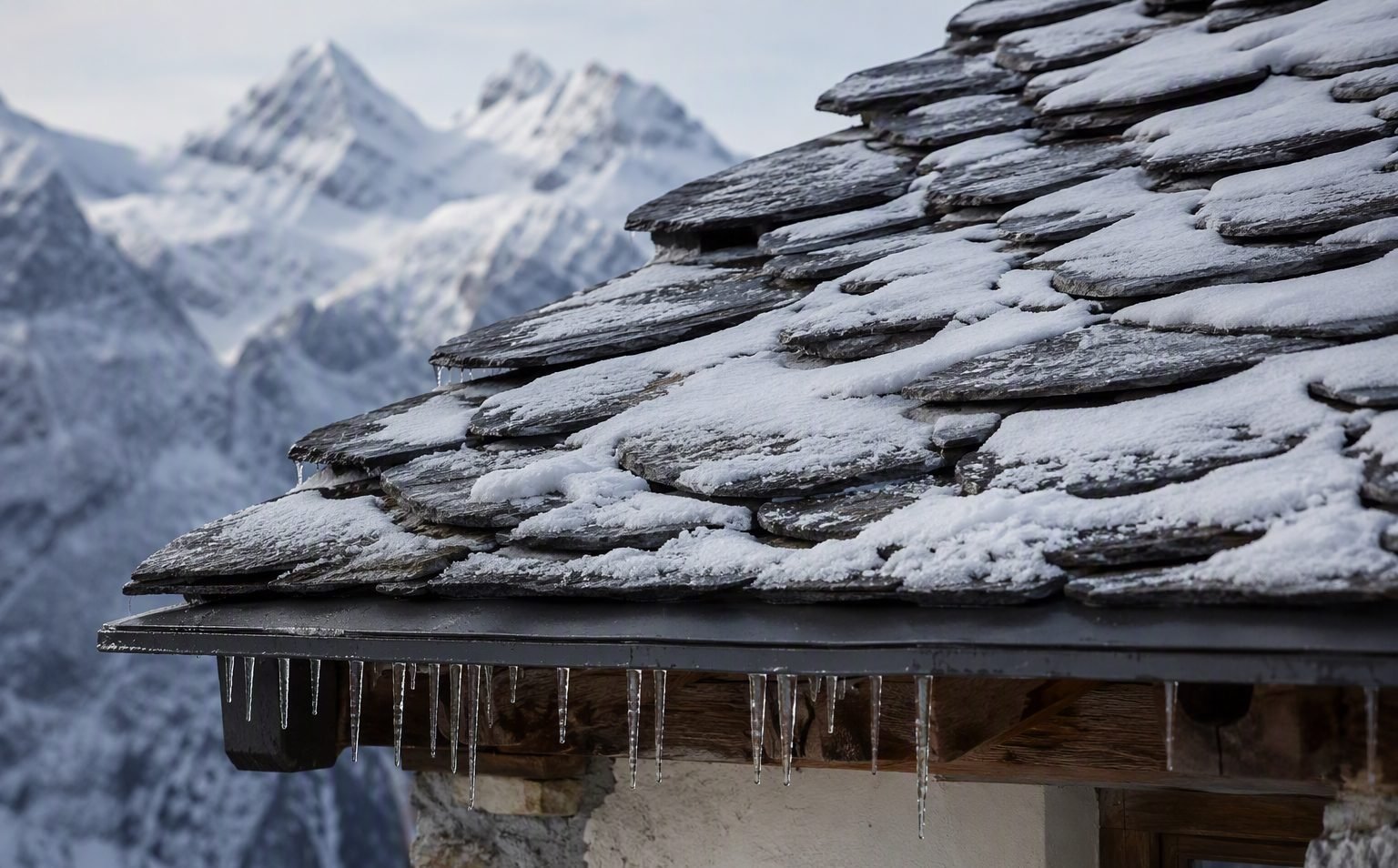
Slate and powder above Sölden.
Innsbruck Office — Current Conditions
Updating...
The Valley, Measured Honestly
Let's start with the geography, because in the Ötztal the geography is the investment memo. The valley runs 67 kilometers from the Inn river near Ötztal-Bahnhof up to the glacier gates above Sölden, and it's the longest side valley in Tyrol. Most Alpine valleys give you one economy — a winter economy, a summer economy, maybe a spa economy if you're lucky. The Ötztal gives you all three stacked on top of each other, and it gives them to you at altitude. That's the part American buyers consistently underestimate. Altitude isn't a marketing adjective here. It's the balance sheet.
The valley holds two glaciers — the Rettenbach and the Tiefenbach — both reached from Sölden by lift and by the highest paved road in the Eastern Alps. Between them they carry skiing roughly ten months a year, and in good snow cycles the lifts above Sölden don't fully stop turning from late September to early May. The Rettenbach hosts the World Cup season opener every late October — the giant slalom that tells the ski industry the winter has officially begun — and that single weekend fills every bed in the valley at rates the town can't touch again until February. Obergurgl, forty minutes higher up the road at 1,930 meters, markets itself as the Diamond of the Alps, and for once the nickname is doing arithmetic rather than poetry: it's the highest parish village with a church in Austria, and the snow reliability at that elevation is close to absolute.
Now the number that matters most for a buyer. Sölden has about 3,400 permanent residents. It has roughly 15,000 guest beds. Read that again — a village where the tourist capacity is more than four times the population. This isn't a town with a ski area attached. It's a resort with a town attached. The implication for property is direct: nearly every square meter of lodging stock in Sölden exists to be rented, the entire municipal infrastructure is oriented toward guests rather than residents, and the zoning, the bed-tax regime, and the trade licenses all assume your lodge will work for a living. In Kitzbühel you can buy a house and keep it dark eleven months a year and nobody much notices. In Sölden, the town notices. The town is counting on your occupancy.
The valley's other anchors deserve a line each. Längenfeld, in the middle reach, has the Aqua Dome — a thermal complex that pulls a year-round wellness crowd that skis half-days or not at all. Vent, at the end of its own side valley at 1,900 meters, is a mountaineering village with strict building limits and almost no turnover; lovely to visit, nearly impossible to buy. Umhausen and Huben serve the value end. And Sölden's own summer has quietly become serious: the Bike Republic Sölden program has made the town one of the Alps' top mountain-bike destinations, which matters because it's converting the old June–September hiking shoulder into a genuine second season with younger guests and longer stays. For an owner, every week the valley adds to its summer calendar is a week that used to sit empty on your booking sheet.
The Lodge Segment: What You're Actually Buying
When we say "lodge" in the Ötztal, we mean a specific animal: a detached or semi-detached alpine building of 200 to 500 square meters, usually four to eight bedrooms, sauna mandatory, boot room with heated racks, and a living floor built around a fireplace and a view. These are not chalets in the Stubaital sense — they're bigger, more expensive, and almost always positioned in the rental market at the top end, sleeping ten to sixteen guests who book by the week and expect catered or near-catered service.
Pricing, as of our last survey of asking and achieved figures: in Sölden proper, expect €5,500 to €8,500 per square meter for lodge-grade stock, with the top of that band reserved for ski-in proximity to the Giggijoch or Gaislachkogel lifts or for new-build product with full hotel-standard fit-out. Obergurgl runs higher — €7,000 to €10,000 per square meter — because the village is tiny, the lift company and a handful of families control most of the land, and almost nothing new gets built. Scarcity is the pricing mechanism in Obergurgl; there is no other. Glacier proximity commands a measurable premium everywhere in the valley. A lodge whose guests can be on glacier snow by nine in the morning, in October, while Kitzbühel's lifts are still closed, is simply a different product than a lodge in a four-month resort, and the market prices that difference without sentiment.
One structural point before you fall in love with a floor plan. Most of the lodge stock that trades in Sölden carries a touristic dedication — a Betriebsstätte or gewerbliche Beherbergung classification — rather than a pure residential title. That's not a defect. It's the mechanism that lets you rent legally at scale, and it's what keeps Sölden's rental inventory liquid while other Tyrolean resorts have been locked down by Zweitwohnsitz restrictions. But it cuts both ways: a lodge with touristic dedication is expected to rent, the municipality may condition the title on continued operation, and you can't quietly convert it into a private family seat that never takes a booking. If what you actually want is a private retreat, say so on day one, because the search changes completely. We'll protect you from buying the wrong title type — but only if you tell us the truth about how you'll use the place.
| Ötztal Market Snapshot | Figure | Note |
|---|---|---|
| Valley length | 67 km | Longest side valley in Tyrol |
| Glaciers | Rettenbach & Tiefenbach | Ski terrain above 3,000 m |
| Effective ski season | ~10 months | vs. ~4 months in Kitzbühel |
| Sölden population / guest beds | ~3,400 / ~15,000 | Beds exceed residents 4-to-1 |
| Obergurgl elevation | 1,930 m | Highest major village in Tyrol |
| Sölden lodge pricing | €5,500–€8,500 / m² | Top band: lift-adjacent, new-build |
| Obergurgl lodge pricing | €7,000–€10,000 / m² | Scarcity-driven; minimal new supply |
| Gross rental yield | 3.5%–5.2% | Lodge segment, professional letting |
| Net rental yield | 2.5%–3.8% | After management, utilities, upkeep |
Rental Yield: The Ten-Month Arithmetic
Here's where the Ötztal earns its keep in a portfolio. Gross rental yields on professionally let lodges run 3.5 to 5.2 percent; net, after management, linen and utilities, platform fees, maintenance, and the local bed tax, you're looking at 2.5 to 3.8 percent. Those aren't headline-grabbing numbers next to a Midwest duplex. But yield comparisons across ski resorts only make sense once you normalize for season length, and that's where the glacier does its work.
Kitzbühel — beautiful, prestigious, liquid — skis about four months a year at realistic guest-paying occupancy. The Ötztal skis ten. Sölden's winter season effectively opens with the World Cup weekend in late October, when the Rettenbach glacier hosts the first giant slalom of the circuit and the town sells out at festival rates, and it runs through the first weekend of May. That's twenty-six-plus weeks of prime winter inventory, before you count a single summer night. Add the June-through-September hiking and biking season — which, thanks to the Bike Republic push and the glacier road, now fills genuinely rather than nominally — and a well-run lodge can carry 32 to 38 revenue weeks a year. A comparable Kitzbühel chalet is doing very well to clear 20.
The weekly numbers behave accordingly. A 280-square-meter Sölden lodge sleeping twelve, professionally photographed and listed on the right platforms, commands €3,500 to €4,500 per week in the core winter season, more over Christmas, New Year, and World Cup week, and €2,200 to €2,800 in the summer hiking months. Shoulder weeks in May and November are honest write-offs — budget for them, don't pretend otherwise. The agencies that will manage your lodge take 18 to 25 percent of gross depending on service level, and the good ones earn it: the ten-month season means ten months of check-ins, hot-tub chemistry, and snow-clearing invoices. We tell buyers to underwrite at the conservative end — 4 percent gross, 2.8 percent net — and treat anything above that as found money. If the deal only pencils at 5.2 percent gross, it doesn't pencil.
One more yield consideration, and it's the one the spreadsheet optimists always skip: staffing. Sölden's ten-month season means your lodge manager, your cleaner, and your hot-tub technician all need year-round employment in a village of 3,400 people where every hotel is competing for the same labor. Budget for it. The operators who pay properly and early keep their staff; the ones who squeeze lose their five-star reviews by February, and in a bed-rich resort, reviews are occupancy.
Foreign Ownership: Reading the Tyrolean Fine Print
Austria's land purchase law is devolved to the provinces, and Tyrol's version — the Tiroler Grundeinkaufsrecht — is among the stricter ones. For EU and EEA citizens, buying residential or touristic property is generally a procedural exercise: notification, confirmation, done. For non-EU buyers, which since 2021 emphatically includes Americans, the authority examines the purchase individually, and the outcome depends heavily on what and where you're buying.
The bright lines, as we advise them: agricultural land and land in designated agricultural zones — Grünland — is effectively closed to non-EU purchasers absent exceptional circumstances, and Tyrol applies this strictly. But village centers are exempt. Sölden's core, Obergurgl's village fabric, Längenfeld's center — these sit in Bauland, designated building land, where the transaction is approvable in most cases we've tracked, particularly when the property carries touristic dedication and the buyer commits to continued rental operation. That last point is worth internalizing: the Tyrolean authority looks favorably on purchases that keep beds in the rental pool and contribute to the local tourism economy, and looks skeptically on purchases that take beds out. Your application should say so, explicitly, with a letter of intent to retain the operating structure. We've seen that single paragraph move files.
On costs, the standard Austrian stack applies. Property transfer tax — Grunderwerbsteuer — is 3.5 percent of the purchase price. Land registry entry, the Grundbuch, adds 1.1 percent. Notary and contract drafting run about 1.5 percent all-in. If you engage a buyer's agent — and in a market where the best lodges trade off-market through the lift-connected families, you should — expect 3 to 5 percent depending on scope and whether the mandate includes the operating handover. Call it 9 to 11 percent in round trip transaction costs before furnishing. On a €2 million lodge, that's €180,000 to €220,000 that never comes back, so the hold period matters. We don't recommend Ötztal to anyone with a horizon under seven years, and we say that knowing it costs us some inquiries. The full breakdown lives on our acquisition costs page, and it's worth reading before you fall for a facade.
Financing, briefly: Austrian banks will lend to non-resident buyers against Tyrolean resort property, typically 50 to 60 percent loan-to-value at terms materially better than US resort lending, but they lend against documented rental income, not against your W-2. If the lodge has three years of booking history, bring it. That's worth more in the credit committee than your balance sheet.
Why the Glacier Is the Whole Thesis
Strip the romance out of this and you're left with one question: what does a ski-resort property look like as a twenty-year hold, in a warming climate? The honest answer is that the Alps are bifurcating. Below roughly 1,500 meters of village elevation, snow reliability is deteriorating on a decadal trend — later openings, thinner Christmas weeks, rain events in January that used to be freak occurrences and now appear in the forecast with depressing regularity. Resorts are spending fortunes on snowmaking to defend the Christmas window, and snowmaking works, but it defends the piste, not the experience. Guests who fly across an ocean or drive six hours want the white valley, not white ribbons on a green hillside.
Above 3,000 meters, the physics still cooperate. The Rettenbach and Tiefenbach ski terrain sits in a band where natural snow remains statistically reliable for the season lengths the resorts advertise, and where even in the worst winters the glacier pistes open on schedule. That's why every serious Alpine investment conversation now includes an altitude screen, and it's why Obergurgl — a village at 1,930 meters, the highest major village in Tyrol, with no glacier of its own needed because it simply starts high — carries the pricing it does. The market has begun repricing snow reliability the way coastal markets repriced flood risk twenty years ago: slowly at first, then suddenly, and then permanently.
For a buyer, this reframes the Ötztal premium. You're not paying €8,000 a square meter for a nicer fireplace. You're paying for a ten-month revenue engine whose fuel supply is the most climate-resilient in the Eastern Alps. The glacier is, in effect, an insurance policy baked into the real estate — a hedge against the single largest structural risk facing every Alpine property owner. When we model twenty-year holds, the divergence between a 1,200-meter resort and a 3,000-meter glacier resort isn't a rounding error. It's the whole spread. We expect that spread to widen, and frankly we'd be negligent if we told you otherwise.
There's a second-order effect worth noting. As low-altitude resorts struggle, their guests don't stop skiing — they migrate upward. The demand doesn't vanish; it concentrates. Sölden's fifteen thousand beds absorb guests who used to default to lower resorts for Christmas and early season, and every lost December week down-valley is a gained one here. Climate risk, perversely, is a demand consolidator for whoever owns at altitude. That's not a cheerful observation. It's just the ledger.
Liquidity, Exit, and Other Subjects Raised Too Late
Buyers ask us about entry prices constantly and exit prices almost never, which is backwards — you make your peace with a market's liquidity on the day you buy, not the day you sell. So here it is plainly. Sölden lodge stock is reasonably liquid by Alpine resort standards: the buyer pool is international, the resort's fame does your marketing for you, and a well-documented rental book can shorten a sale from years to months. A lodge with three seasons of clean booking history, audited utility costs, and a transferable management contract sells like a small business, because that's what it is, and small-business buyers move faster than dreamers. Obergurgl is slower. The village is small, the stock is thin, and the families who own there tend to hold for generations; when something does trade, it often trades quietly, inside the valley, before a public listing ever appears. If you buy in Obergurgl, assume a twelve-to-twenty-four-month exit window and price your patience accordingly.
And a word on the exit price itself. The appreciation case for glacier property is strong, but it is not a straight line, and the 2022–2023 rate shock proved it: transactions across Tyrolean resort markets thinned markedly, sellers who needed to sell took single-digit discounts, and sellers who didn't simply waited. The owners who came through that window comfortably were the ones whose rental income covered carrying costs with room to spare — the ten-month season again, doing quiet defensive work. Leverage is the variable that turns a slow market into a forced sale. Keep loan-to-value under 50 percent, keep a year's carrying costs in reserve, and the Ötztal's liquidity profile is manageable. Stretch to 70 percent because the bank offered it, and you've handed your exit timing to the ECB. We keep a leather ledger precisely so we remember which buyers ignored that sentence.
Case Study: 280m² Above the Dorfstraße
A concrete example, from a file we reviewed last season. A 280-square-meter lodge in Sölden, ten minutes' walk from the Giggijoch gondola, five bedrooms, sauna, heated boot room, south-facing terrace with the glacier in the window. Asking price €2.1 million; achieved €1.96 million after a survey flagged roof insulation and the seller needed an autumn close. Purchase costs — 3.5 percent transfer tax, 1.1 percent registry, 1.5 percent notary, 3 percent agent — added roughly €178,000. All-in basis: about €2.14 million.
The operating year: twenty booked weeks at a blended €3,900 per week — heavy winter weighting at €4,200 to €5,000 for the peak and World Cup weeks, summer weeks at €2,600 to €2,800, and honest zeros in May and November. Gross rental income: €78,000, a 4.0 percent gross yield on the purchase price. Costs: management at 20 percent, utilities and the inevitable hot-tub repairs, linen, platform fees the manager doesn't absorb, bed tax, insurance, and a reserve for the roof the survey warned about. Net to owner: €52,000. Net yield on purchase price: 2.7 percent. Net yield on all-in basis: 2.4 percent.
Is 2.7 percent a reason to wire two million euros across the Atlantic? On yield alone, no — and we told the buyer so. The case for this lodge rests on three legs. First, the income covers all carrying costs with a surplus, so the asset pays its own way while the family uses it four weeks a year — weeks that would otherwise have cost them €15,000-plus in rental outlay. Second, the appreciation thesis: Sölden lodge stock has compounded at roughly 4 to 6 percent annually over the past decade, and the glacier premium described above is, in our read, still early in its repricing. Third, currency and jurisdiction diversification — a euro-denominated hard asset in a country with stable title law, which for a US-family balance sheet concentrated in dollar assets is worth something that doesn't fit in a yield cell. Add the legs together and the deal clears a reasonable hurdle. Take any two of the three away and we'd have advised passing. That's how thin the margin for error is at this price point, and we'd rather you hear it from us than discover it in year three.
Who This Market Suits — and Who It Doesn't
The Ötztal suits a buyer with a seven-plus-year horizon, a genuine intention to use the lodge several weeks a year, the appetite to run — or hire — a real rental operation, and the capital to absorb a €9,000-a-month surprise without flinching. It does not suit the yield-maximizer, the flipper, or the buyer who wants a private retreat with the rental income as an occasional tip; the town, the title, and the economics all push against that use. If that's you, look at the Stubaital instead — lower entry, simpler operations, and a valley that doesn't mind a quieter house.
So the Ötztal ledger, balanced: the most reliable snow in the Eastern Alps, a ten-month season no Austrian rival matches at scale, a rental culture built into the zoning, and pricing that already reflects a good portion of those truths. You pay full price for certainty here. In our experience, certainty is usually worth it.
Ready to run your own numbers? Start with the full acquisition cost breakdown, then see how a ten-month season moves the math on our seasonal yield analysis.
Tyrol Crest Estates is not a real estate brokerage. This content is for informational purposes only and does not constitute investment advice.