Innsbruck Valley: The Urban Alpine Studio Market
Student tenants, Olympic infrastructure, and the most liquid small-apartment market in the Austrian Alps.
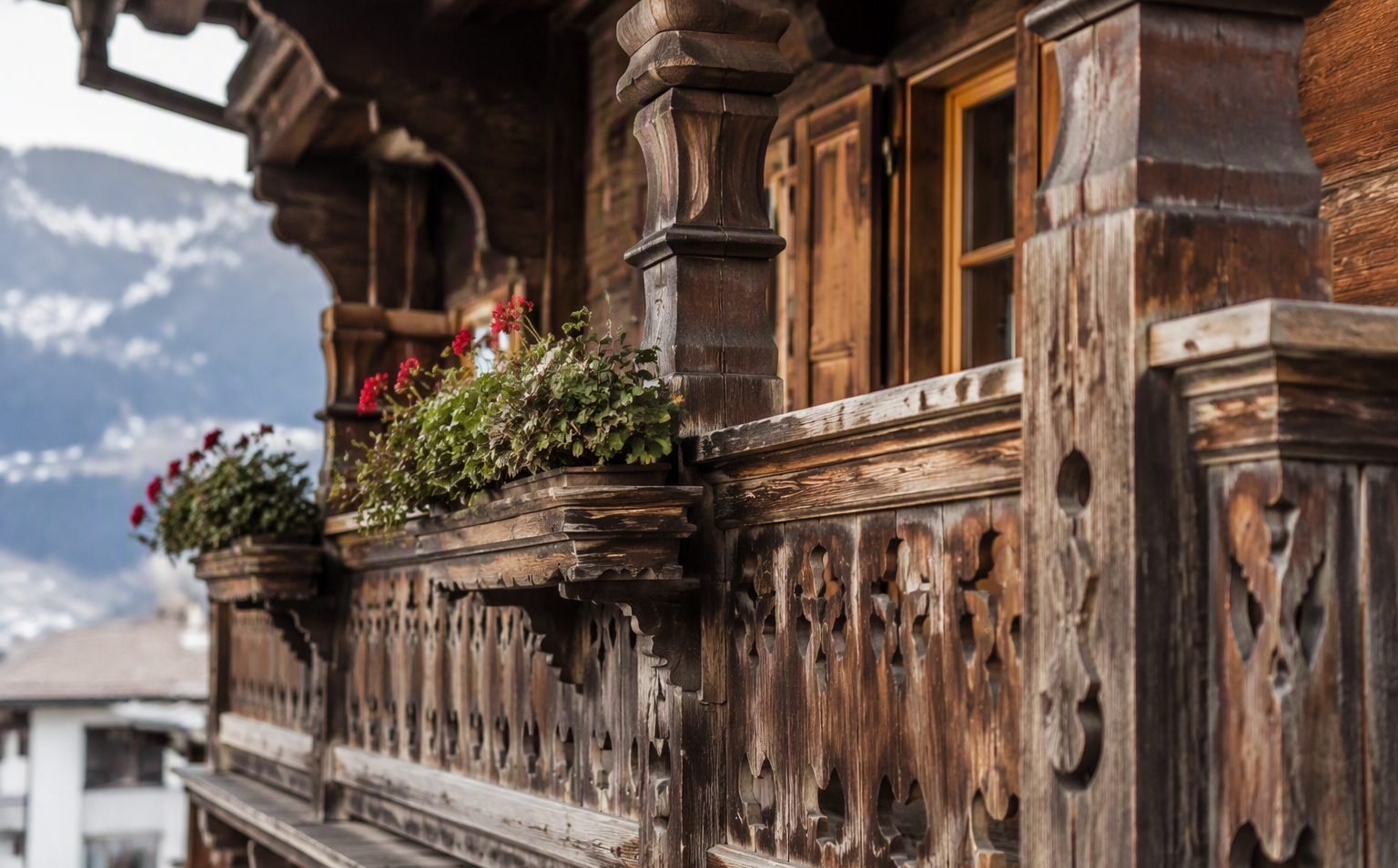
Hötting balcony detail — carved larch, 1890s facade.
Innsbruck Office — Current Conditions
Updating...
Innsbruck Market Overview
Innsbruck is the capital of Tyrol and the only city in the Austrian Alps where you can buy a studio apartment, rent it twelve months a year, and sell it again inside a quarter if your plans change. That's the whole thesis in one sentence, and it's why we open the valley series here. The city proper counts roughly 132,000 residents. The metro area pushes past 300,000 once you add Hall in Tirol, Rum, Völs, and the villages strung along the Inn. It's a real city with a real economy — not a resort that empties in April.
Three structural facts drive everything else on this page. First, the university. The Leopold-Franzens-Universität and the Medical University together enroll around 30,000 students, and the majority of them arrive from outside Tyrol — from Vienna, from Germany, from Italy. They need small units near the center, and they need them every single year. Second, the Olympics. Innsbruck hosted the Winter Games in 1964 and again in 1976, and the legacy infrastructure — the Bergisel ski jump, the Olympic ice stadium, the bobsleigh track at Igls, the tram and bus network built to move crowds — still functions and still gets maintained. Third, the airport. Innsbruck Airport sits 4 kilometers from the old town and runs seasonal direct service to London and Amsterdam through the winter, plus year-round connections via Vienna and Frankfurt. A London-based owner can leave Heathrow on a Friday morning and stand in his Hötting studio before lunch.
Prices reflect that liquidity. The citywide average for condominiums sits near €8,400 per square meter as of late 2024, which makes Innsbruck the most expensive city in Austria after Vienna and Salzburg on a headline basis — but the studio segment, the segment this page covers, runs cheaper per unit and yields better per euro than anything in either of those cities. Transaction volume in the 35-55m² band has held up even through the 2023 rate shock, because the buyer pool is deep: parents buying for student children, local investors, German second-money, and a steady trickle of US and UK buyers who did the math on Salzburg and found it wanting.
One caution before we go further. Innsbruck's old town — the Altstadt, with the Goldenes Dachl and the arcaded Herzog-Friedrich-Straße — is almost entirely protected heritage stock. Beautiful to walk, miserable to own. Renovation approvals can take a year, and rental restrictions inside the preservation zone bite hard. The investable studio market lives in the ring of districts just outside it: Hötting to the north across the Inn, Wilten and Pradl to the south, Saggen and St. Nikolaus to the east. That's where we'll spend our time.
The Studio Segment: 35 to 55 Square Meters
The Innsbruck studio is a specific animal. We're talking 35-55m², usually one main room plus a separated kitchen or kitchenette, a bath, and — if you're lucky and you pay for it — a balcony. Buildings run from 1890s Gründerzeit blocks with three-meter ceilings to 1970s concrete estates to a thin scatter of post-2010 new construction. The price spread across districts is wide enough to matter, and it's driven by walkability to the university's main campus and the Innrain lecture halls.
Hötting: The Premium Play
Hötting sits on the north bank of the Inn, a ten-minute walk over the Innbrücke from the old town and fifteen from the main university buildings. It's the district US buyers ask for by name, partly because of the Hungerburgbahn funicular, partly because the streetscape reads as classic Tyrol. Studios here trade around €10,200 per square meter — the top of the city range for existing stock. A clean 40m² unit with a balcony and a view of the Nordkette will list near €415,000 and sell inside eight weeks. Expensive? Yes. But Hötting also posts the lowest vacancy in the city, under 1.5% in most years, and the tenant queue for a well-presented studio is measured in dozens, not singles.
Wilten and Pradl: The Yield Districts
South of the center, the math improves. Wilten — anchored by the basilica and the main rail station — trades around €7,400 per square meter. Pradl, a working-class district ten minutes further east, sits near €6,800. The stock is plainer: postwar blocks, fewer balconies, more road noise. But the tenants don't care. The university's technical campus and the medical faculty both sit on the southern side of the center, and a Pradl studio rents to a medical student as fast as a Hötting one rents to a law student. Gross yields in Pradl run 120 to 160 basis points above Hötting on identical rent rolls, purely because the entry price is lower.
Price Comparison by District
| District | Studio Price (€/m²) | Typical Rent (€/m²/month) | Gross Yield Range | Vacancy |
|---|---|---|---|---|
| Hötting | €10,200 | €12-14 | 4.2-4.8% | Under 1.5% |
| Wilten | €7,400 | €12-14 | 5.0-5.6% | 1.5-2.5% |
| Pradl | €6,800 | €11-13 | 5.2-5.8% | 2-3% |
| Saggen / St. Nikolaus | €7,900 | €11-13 | 4.8-5.4% | 2-3% |
| Altstadt (restricted) | €10,800 | €13-15 | 4.0-4.4% | Under 1% |
Read the table the way a lender reads it: the spread between the cheapest and the most expensive district is 50% on price and only about 15% on rent. That's the yield argument for Pradl in a single row. The counterargument is exit liquidity — a Hötting studio sells in weeks, a Pradl studio can take a quarter, and in a soft market the gap widens. We hold both views in the ledger and we don't pretend there's a free lunch.
Rental Yield: What Gross and Net Actually Look Like
Here are the numbers we quote in the office, and they're the numbers we'd defend in front of a skeptical accountant. Gross yields on Innsbruck studios run 4.2% to 5.8%, depending on district and condition. Net yields — after management, insurance, the non-recoverable share of building maintenance, the Grundsteuer, and a realistic vacancy allowance — run 3.1% to 4.2%. If a listing agent shows you a net yield above 4.5% on a city studio, he's forgotten a line item. Ask which one.
The rent side is the strong side. Student rentals in Hötting and Wilten command €12 to €14 per square meter per month, which puts a 40m² studio at €480 to €560 — call it €520 as a working midpoint for a unit in decent order. Young professionals, hospital staff, and seasonal instructors pay more: €14 to €16 per square meter for a renovated unit with a balcony, and €17 isn't a fantasy in new construction near the Innrain. The Innsbruck rental market has tightened every year since 2016. Asking rents on new contracts rose roughly 22% between 2019 and 2024, outpacing purchase price growth over the same window, which is why yields here held while they compressed in Vienna.
The standard contract structure favors the landlord more than most US investors expect. Student tenancies are almost universally signed as 11-month contracts — August or September through the following summer — which accomplishes two things. It sidesteps the strictest provisions of the Austrian Mietrechtsgesetz for full-protection tenancies in older stock, and it creates a natural annual repricing moment. Every September, you reset to market. There's no decade-long rent freeze on a properly structured student let. Non-student tenants on open-ended leases in pre-1945 buildings are a different matter entirely — the MRG caps apply, and capped rents can sit 30-40% below market. So when you evaluate a unit, the first question isn't the rent. It's the contract type. Buy a studio with a sitting MRG tenant at a capped rent and you've bought a bond, not an investment.
The Cost Stack, Line by Line
Now the deductions, because this is where US buyers get surprised. Management runs 8-10% of collected rent for a full-service arrangement — tenant finding, contract, handover, inspection, and the 2 a.m. calls. If you self-manage from abroad, you'll spend the difference in mistakes; we've watched it happen. Building insurance and the owner's share of common costs (Betriebskosten the tenant doesn't cover) take another €18-25 per square meter per year. The repair reserve — Rücklage — is typically €1.00-1.50 per square meter per month, paid into the building's fund, and it's non-negotiable. Property tax, the Grundsteuer, is almost comically small by American standards: €80-150 per year on a studio, because Austrian assessed values haven't been meaningfully updated in decades. Add a vacancy allowance of 2-4% (one to two weeks a year, realistic for Hötting, more for Pradl), and income tax on the net — and yes, Austria taxes rental income at your marginal rate, with a US treaty credit mechanism we'll touch on in the acquisition section.
Run that stack on a mid-market example and you get the shape of the whole market: €6,240 gross annual rent on a €115,000 Pradl-adjacent unit becomes roughly €4,400 net before income tax. That's a 3.8% net yield on a conservative underwriting. In Hötting the same arithmetic lands at 3.1-3.4%. You pay for safety here, in yield, exactly as you do in any liquid market.
Seasonal Demand Drivers: Four Seasons, Four Tenant Pools
Innsbruck's gift to the studio landlord is that the demand calendar never actually empties. It rotates. Understanding the rotation is how you keep vacancy under a week, so let's walk the year.
October to February: The University Semester
The winter semester starts the first week of October, and the scramble starts in August. Roughly 30,000 students converge on a city with about 4,500 dormitory beds. Do the subtraction. Every autumn, twenty-some-thousand students hit the private rental market within the same four weeks, and the studios closest to the main campus, the Innrain complex, and the medical faculty clear first. This is the anchor season — the one that justifies the whole strategy — and it renews itself every single year regardless of what the ski weather does.
December to March: The Ski Season Overlay
Layered on top of the students, winter brings the second pool: seasonal workers, ski instructors, lift staff, and the short-stay professional crowd. Innsbruck is unusual in that the ski terrain — the Nordkette above Hötting, Patscherkofel to the south — sits inside the city limits, reachable by funicular and cable car from the center. A ski instructor who works the Seegrube can live in a Wilten studio and commute in twenty minutes. Rents for furnished short lets spike 15-25% over the winter baseline, though we'd caution against underwriting to the spike. Underwrite to the student lease; treat the winter premium as a bonus.
February to April: The Congress Season
Congress Innsbruck and the conference trade fill February through April — medical congresses, Alpine research symposia, the trade fair calendar. This matters less for studios than for the one-bedroom market, but it props up short-let pricing in the shoulder weeks and keeps the furnished segment liquid. A studio that loses a student tenant in June can bridge to October on congress and summer lets without a gap, if it's furnished and within fifteen minutes of the center.
June to September: The Summer Hiking Trade
Summer in Innsbruck is the season American buyers consistently underestimate. The city is the trailhead capital of the eastern Alps — the Karwendel to the north, the Stubai Alps to the south — and June through September brings a hiking and cycling crowd that stays longer and spends more calmly than the winter skier. Occupancy for short-let units runs 70-80% through July and August. But here's the discipline we enforce in the ledger: the summer trade is a bridge, not a pillar. It smooths the cash flow between academic years. It does not replace the student lease, and any pro forma that leans on summer income for its core yield is a pro forma we'd red-line.
Put the four seasons together and you get the number that matters: realistic annual occupancy for a well-located Innsbruck studio is 96-98%. Not 90%. Not "high." Ninety-six to ninety-eight percent, year after year, because the tenant pools don't overlap — they hand off. That's the structural advantage no pure resort market can copy.
Acquisition Mechanics for Foreign Buyers
Now the part where we earn our coffee. Austria is not Switzerland — foreigners can buy here — but it isn't a free-for-all either, and Tyrol administers its own rules. The framework splits cleanly by passport.
EU Citizens: Unrestricted
If you hold an EU or EEA passport, you buy on exactly the same terms as an Austrian. No approval, no quota, no extra filings. You sign, you pay, you're registered in the Grundbuch, the land registry, and the property is yours with the strongest title protection in continental Europe. Irish and German buyers dominate this lane, and the process from accepted offer to registered title runs six to ten weeks.
Non-EU Citizens: The Approval Process
US buyers need approval from the Tyrolean regional government — the Grundverkehrsbehörde, the land transfer authority at the state level. Here's what we've seen in practice, across enough files to have confidence in the pattern. Approval is typically granted where the purchase price exceeds roughly €400,000, on the theory that higher-value acquisitions don't pressure the local housing stock, or where the buyer can demonstrate local employment creation — a management company hire, a renovation contract with local trades. Below that threshold, approvals do get issued, but the file takes longer and the outcome is less predictable. Budget three to six months from application to decision, and sequence your purchase contract accordingly: Austrian notaries are used to drafting contracts conditional on approval, with a long-stop date and a deposit-return clause. Insist on both. A seller who won't accept an approval condition is telling you something about how he expects the file to go.
The Cost Stack at Closing
Transaction costs are heavier than in the US and lighter than the horror stories suggest. The notary and land registry entry run about 1.5% of the purchase price, all-in. The real estate transfer tax — Grunderwerbsteuer — is 3.5%, calculated on the purchase price. If you use a Makler, the buyer's side agent fee is 3.6% including VAT — round it to 5% in your planning if the seller's arrangement pushes ancillary costs your way, because in negotiation-heavy deals it can. Total friction on a foreign-buyer Innsbruck studio purchase: 8-10% of price, once, at the door. That's the entry ticket. On a €378,000 studio you're writing €30,000-38,000 of checks that buy you nothing but the right to own the thing, so the hold period matters. Under five years, the math rarely works. Over ten, it almost always has.
Financing deserves a paragraph of its own. Austrian banks will lend to non-residents — 50-60% loan-to-value is realistic for a US buyer with documented income, at rates that ran 3.4-4.2% fixed in late 2024. But many of our clients buy studios in cash, and at this price point that's often the right call. A €400,000 cash purchase with a 3.2% net yield beats a levered structure whose debt service eats the entire margin at 4% money. Run both models. The leverage that built fortunes in Austin in 2015 destroys them in Innsbruck in 2025.
Why Innsbruck Outperforms Salzburg
Every US buyer who calls us about the Austrian Alps asks about Salzburg within the first ten minutes. The Sound of Music effect is real and we respect it. But when we open the ledger and compare line by line, Innsbruck wins for the studio investor, and it isn't close.
Start with entry price. Comparable central Salzburg studios trade 15-25% above Innsbruck per square meter — you're paying a tourism premium before you've collected a euro of rent. Second, the tenant base. Salzburg has a fine university with around 18,000 students; Innsbruck has 30,000, plus a medical university, plus a hospital system, plus a larger year-round employer base in a metro twice Salzburg's size. When a Salzburg student tenant leaves, the replacement pool is thinner. Third — and this one surprises people — air connectivity. Salzburg's airport is seasonal and thin; Innsbruck runs winter directs to London and Amsterdam, year-round hub connections through Vienna and Frankfurt, and sits 90 minutes by motorway from Munich's intercontinental airport. A Salzburg owner flying from New York connects through Frankfurt or Vienna anyway. An Innsbruck owner does the same, or flies into Munich and drives. The practical difference is nil, and the price difference is 20%.
The honest counterpoint: Salzburg's appreciation ran slightly ahead of Innsbruck's over 2014-2019, driven by scarcity in its UNESCO-protected core. But that same protection is the trap — renovation restrictions there are stricter than Innsbruck's Altstadt rules, and the short-let regulations Salzburg tightened in 2023 cut the furnished-rental yields that justified the premium. For a US investor buying a studio to hold and rent, we put Innsbruck first, Salzburg second, and we sleep fine.
Case Study: A 45m² Hötting Studio, Held and Rented
Let's put a real file on the table. This is a composite of two near-identical transactions our research desk tracked between 2019 and 2024, with the numbers rounded to keep the arithmetic clean.
The unit: 45m² on the third floor of a 1908 Gründerzeit block in upper Hötting, one main room, separate kitchen, renovated bath from 2017, small west-facing balcony with a Nordkette view. Purchase price in autumn 2019: €378,000 — €8,400 per square meter, market rate at the time. Closing costs added €31,000. Total in: €409,000.
The lease: rented within three weeks of closing to a doctoral candidate at the medical university, on the standard 11-month academic-year structure, renewed annually with a rent step. Current rent: €1,350 per month — €30 per square meter, which tells you this is a premium renovated unit at the top of the range we quoted earlier. Gross annual rent: €16,200.
Now the deductions, and we deduct everything: management at 9% of collected rent (€1,458), insurance and owner-side building costs (€1,050), the repair reserve (€610), property tax (€120), a two-week vacancy and sundry allowance (€810). Total costs: €4,050. Net operating income: €12,150. Net yield on the €378,000 purchase price: 3.2%. Net yield on the all-in €409,000: 3.0%. Nobody retires on that number, and we never said anyone would. The studio investment case is a yield-plus-appreciation case.
And the appreciation has done its job. Hötting studio values rose approximately 8.5% per year on a compounded basis across 2019-2024 — a stretch that included a pandemic and the fastest rate-tightening cycle in euro history. The €378,000 unit was informally appraised in late 2024 at roughly €570,000. Total annual return, yield plus appreciation, ran above 11% on equity for a cash buyer. We don't project that forward — the 2019-2024 appreciation rate was exceptional and 2025 pricing has flattened — but it shows what the asset class did through a full stress cycle: the rent never stopped, and the value never cracked.
One line on risk, because the ledger has a page for that too. The two things that can hurt an Innsbruck studio owner are a university enrollment shock and a regulatory shift on short lets. Neither is likely in the next five years — enrollment has grown nine of the last ten, and Tyrol's rental rules have tightened around resorts far more than around the city — but a buyer who can't name his risks doesn't own an investment, he owns a hope. Size the position so a 10% rent correction is an inconvenience, not a crisis.
The lessons we write in the margin of this file: buy the district, not the discount; renovate before you rent, because the €30/m² rents go to finished units; sign the 11-month contract and reprice every September; and hold the asset long enough for the closing costs to amortize into noise. Five years minimum. Ten is better.
Innsbruck won't make you rich in a season. It will pay you 3% net while you own a piece of the Alps' most durable small-unit market, and it will hand you a buyer within weeks whenever you decide to leave. In this ledger, that's what quality looks like.
Read next: full breakdown of Austrian acquisition costs and closing math
Read next: how seasonal demand shapes alpine rental yield across Tyrol
Tyrol Crest Estates is not a real estate brokerage. This content is for informational purposes only and does not constitute investment advice.